
Seeing the first quail emerge around Little River is one of the classic signs that the Mendocino coast is tipping into late spring. Quail spend much of the wetter winter tucked into dense brush, salal, and huckleberry tangles along the meadow margins to stay dry and hidden from hawks. In late spring, breeding season begins, insects are abundant, grasses and seed-bearing plants mature, and the landscape is drying slightly after the long damp season.
Quail are prey animals, extremely alert to cover, weather, and predator pressure. Unlike ravens or hawks, quail don’t announce themselves with grandeur. They scurry. They appear briefly at the edge of perception, like little emissaries from the brush.
They stay around the Mendocino coast year round. They are not long distance migrants like swallows, warblers, or many shorebirds. They don’t trust the open sky. They prefer running through cover. With hawks, ravens, owls, foxes, and bobcats around, brushy edges are their security system. That’s why you often see them erupt from huckleberry tangles or scuttle from one shadow to another instead of soaring. They belong to particular hedgerows, clearings, and thickets the way humans belong to neighborhoods.
The first sign something was wrong was the silence. Not total silence. The Pacific still pounded below the cliffs down the hill from Frog Pond Road. But the usual small rustlings of spring, the towhees scratching leaves, the tiny skitter of lizards, and the fussy murmurs of quail coveys was noticeably absent as I walked the old path beyond the meadow.
Fog leaned low through the redwood trees like smoke from some extinguished fire. Back in the meadow, silver dew still clung to the grass. Somewhere across the way a dog barked once then stopped abruptly.
Suddenly a strange sound echoed through the woods. Not the delicate coo-coo-coo of an ordinary quail. Deeper. A bass note. More like a foghorn than a bird. COOOOOO.
I stopped. The undergrowth ahead trembled. At first I thought it was a deer. Then a massive manzanita bush parted and something stepped onto the trail.
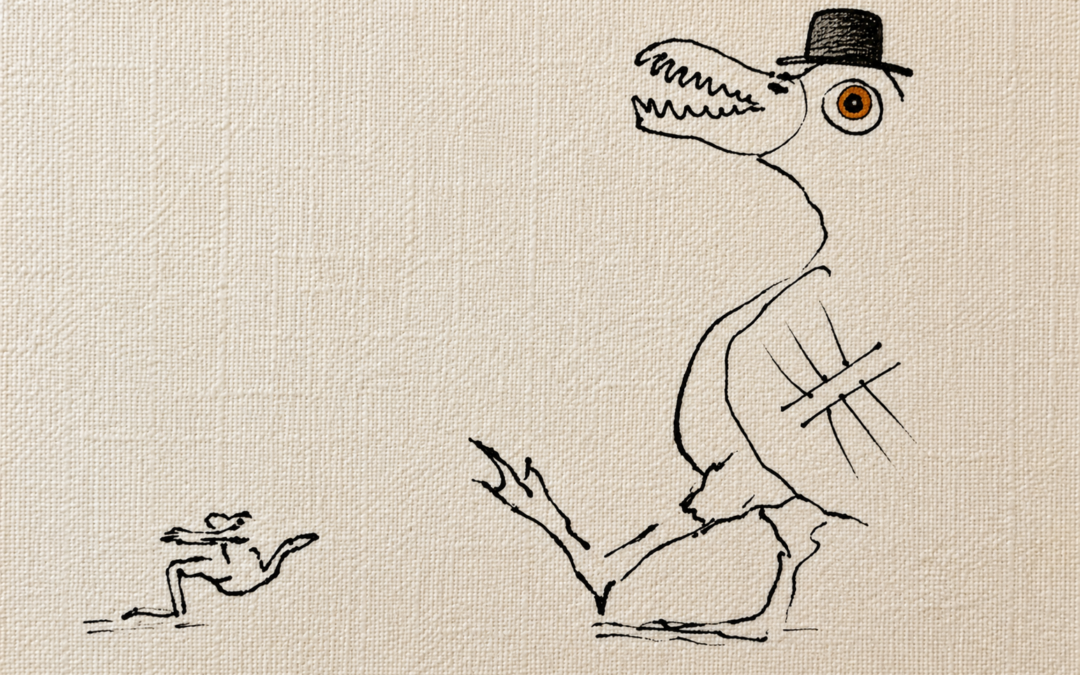
The thing stood nearly twelve feet tall. It was unmistakably a quail. An absurd hat sat on his head. Its feathers were arranged in some kind of primitive petroglyph. Its massive scaled feet pressed into the mud, and its amber eye was fixed on me as if I were no more than a lowly worm trying to squiggle out of danger.
All I could muster was a shaky “No!”
The giant quail tilted its head then charged right at me.
You might think such a bird would run awkwardly. This was not awkward. The thing, whatever it was, moved with prehistoric efficiency, horrifying speed, body low, feet hammering the earth.
I bolted down the trail. I could hear the pounding behind. THOOM! THOOM! THOOM!
Branches exploded. Ferns flattened. Somewhere nearby a flock of ordinary quail burst from cover screaming like tiny witnesses to an unfolding apocalypse.
I sprinted toward an old logging road, face and arms scratched, legs straining, heart pounding.
The giant quail followed. Its calls echoed through the fog. COOOO. COOOO.
Each cry sounded less like bird language and more like some deranged accusation.
I risked a glance backward. Bad decision. The creature was closer now, neck stretched forward, hat whipping in the wind. Its eye held the cold intelligence of something ancient, something that remembered the north coast before roads, before houses, before people started naming places after themselves.
I tripped over a root and tumbled downhill into salad bushes. The earth rattled and shook. And then it was there, the giant quail, looking down at me from the edge of the slope.
For a moment it simply stared. Then, to my amazement, it spoke.
“You ignored the signs.”
Its voice sounded like gravel poured slowly into the back of an old truck.
I blinked. “What?”
“The coveys return. The insects rise out of the grass. The swallows come back. Spring opens the old door again. But humans never listen.”
The giant bird stepped closer.
“You think the coast belongs to you because you built houses and coffee shops.”
Its enormous claw pressed into the mud just inches from my hand.
“But we remember.”
Somewhere far off, beyond the fog, I heard the ocean roaring against the cliffs. I lay still, unable to move.
The bird lowered its colossal head. Its breath smelled faintly of wild fennel and damp earth.
“We were here before the shipwrecks,” it said. “Before the logging. Before the highways. Before your stories.”
I tried to stand.
The silly hat on the quail’s head trembled.
Suddenly dozens of ordinary quail emerged silently from the brush around me. They ringed the clearing.
I watched and waited.
The giant quail turned its head toward the forest as if it heard a distant signal. Then, without warning, it exploded upward into flight. The draft from its wings flattened everything around me.
The sound was catastrophic. A cyclone of feathers and wind tore through the trees. Branches bent violently. Fog scattered in spirals.
For one impossible second the giant bird crossed the pale coastal sky above the redwoods like some resurrected creature from the Pleistocene. Then, it vanished into cloud.
The smaller quail disappeared instantly after it.
Silence returned.
I was left alone in the empty meadow. A single oversized feather lay in the grass at my feet. I picked it up carefully, and from somewhere deep in the underbrush came one final sound.
coo.
Good one David
Thank you