
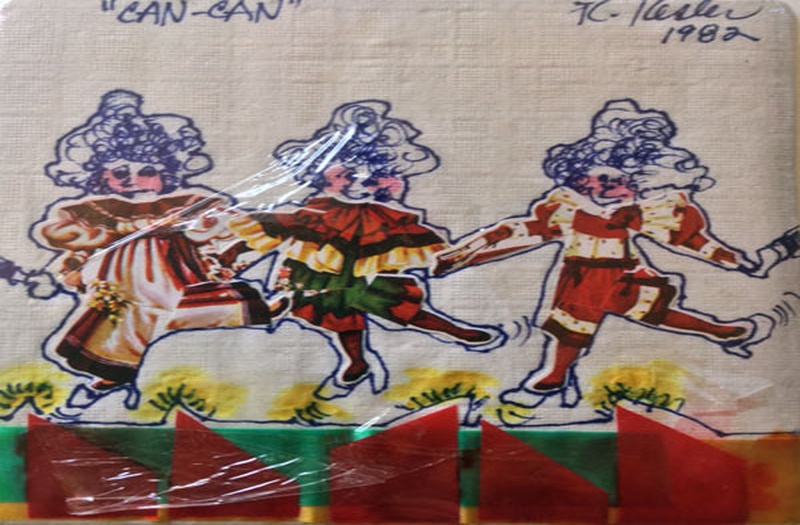
The United States is celebrating its Semiquincentennial (250th anniversary) this year on July 4, 2026, marking 250 years since the adoption of the Declaration of Independence in Philadelphia in 1776. The official celebration has turned into “a melange of Trumpian egoism, Maga populism and Christian nationalism” (replacing history with toxic myth) according to Judith Levine at The Guardian.
Looking at the “facts” of America today, I’m not in as celebratory a mood as I’d like.
Our national debt is around $39 trillion or $104,000 per person (all data in this post is based on readily available government statistics). Debt held by the public now exceeds 100 percent of U.S. GDP meaning that the federal government owes more than the value of all goods and services produced in the country in a year. Debt has grown substantially faster than both the population and the economy. This reflects persistent deficits due to wars, tax changes, entitlement growth, recession responses, and pandemic spending. In 2000, the federal government spent more on national defense than on interest payments. Today, net interest costs are approaching or exceeding the budgets of most federal agencies and have become one of the fastest-growing items in the federal budget. This is one reason the debt issue receives increasing attention from economists across the political spectrum.
Economic growth has been substantial, but ordinary Americans have captured little of it. Gains are concentrated at the top, while middle and working-class real incomes have stagnated, a pattern that correlates with increased political division, despair, and declining life expectancy.
Americans are more sorted by geography, media, education, and values; trust in shared institutions has collapsed; and hostile attitudes toward those with different politics have intensified. The U.S. lacks a common information ecosystem or moral framework in ways that were less true in 2000.
We have much to be thankful for but America is a long way from that “shining city on a hill” imagined by John Winthrop. I hope the next quarter century will miraculously pull us back together and help us climb a little further up that hill. We’ve been closer to the top before, and we can be there again. We only need to try. In spite of the many challenges obvious to any serious observer today, our children and grandchildren have the capacity to move ahead. I’m optimistic. I love America. I too yearn for the shining city on a hill however unattainable it may be in reality.
One could easily drown in a sea of pessimism today like Herman Melville’s Bartleby. Since 2000, Americans have experienced a paradox. GDP grew enormously, technology transformed daily life, stock markets reached repeated highs, yet many people feel economically and socially insecure. The traditional promise was: work hard and life will improve. For many, especially younger, Americans that promise feels less certain because of rising inequality, housing costs, healthcare expenses, debt and inflation.
Bartleby’s response “I would prefer not to play a game whose rewards seem increasingly unattainable” is undoubtedly attractive to many. Not revolution, but withdrawal. Declining trust in government, media, universities, corporations, and churches can be understood partly through this lens. Bartleby doesn’t attack the system. He simply stops believing in it.
What happens when a person rejects every available role but cannot imagine a new one? In an age of burnout, polarization, information overload, and institutional distrust, Bartleby’s quiet stand “I would prefer not to” may speak to more Americans than ever before. Melville’s genius was to recognize that the greatest threat to a society is not always rebellion. Sometimes it is exhaustion. Not the shout of revolution, but the whisper of disengagement. Bartleby does not overthrow the system. He simply ceases to believe that participation matters. That makes him feel strangely contemporary.
The conventional American hero is active. Think of Benjamin Franklin, Thomas Paine, or even Melville’s own Captain Ahab. Americans are supposed to strive, build, compete, invent, expand. Bartleby does none of this. He withdraws. He refuses participation without offering an alternative. What Melville was doing with Bartleby, I think, was giving us a warning. He was showing us what happens when the Timothy Leary prescription (turn on, tune in, drop out) is followed in full. The machine stops. That can be a good thing but it only gets us halfway there. Kuno in the E.M. Forster story climbs back up and starts again. Like Camus’s Sisyphus, if we must carry the rock we can at least imagine what happiness is like while we are doing it.
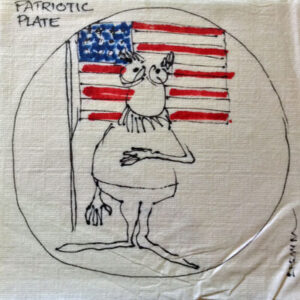
Sea Gull Cellar Bar Napkin Art, Max Efroym artist

Sea Gull Cellar Bar Napkin Art, Jack Haye artist
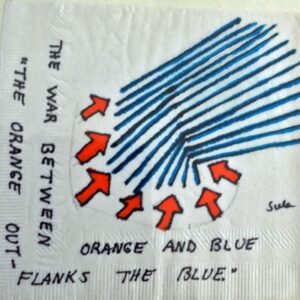
Sea Gull Cellar Bar Napkin Art, Sula Combs artist
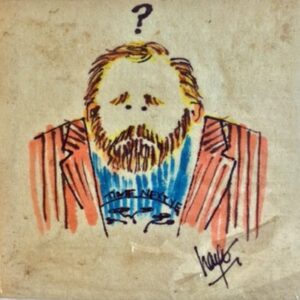
Sea Gull Cellar Bar Napkin Art, Jack Haye artist
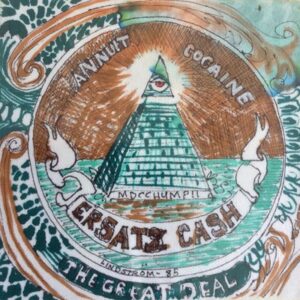
Sea Gull Cellar Bar Napkin Art, Sandra Lindstrom artrist
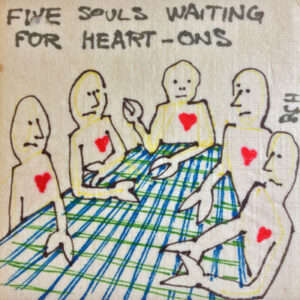
Sea Gull Cellar Bar Napkin Art, Roy Hoggard artist
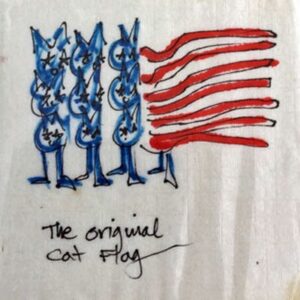
Sea Gull Cellar Bar Napkin Art, James Maxwell artist
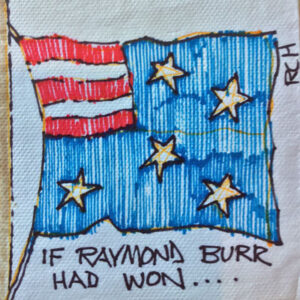
Sea Gull Cellar Bar Napkin Art, Roy Hoggard artist
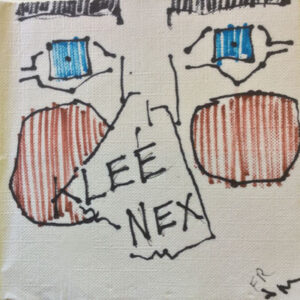
Sea Gull Cellar Bar Napkin Art, James Maxwell artist
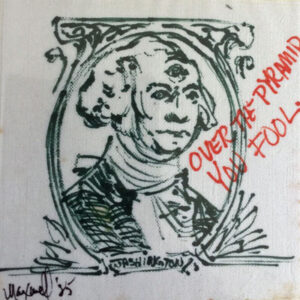
Sea Gull Cellar Bar Napkin Art, James Maxwell artist
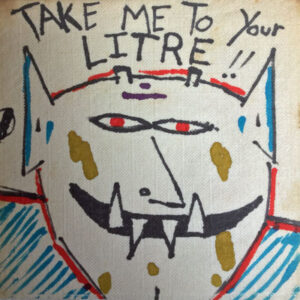
Sea Gull Cellar Bar Napkin Art, BB artist
Bumper-sticker idea: “David Jones for President… of Something!”
I would prefer not to.