
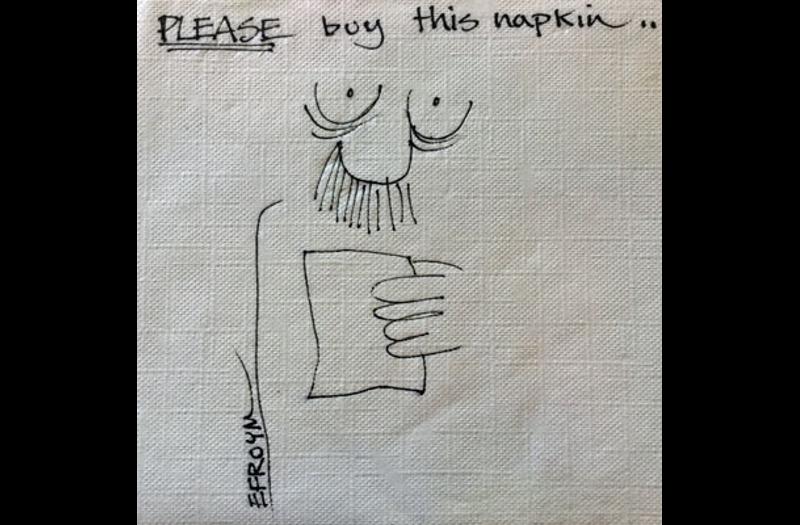
For only 16 cents a day, less than the cost of one cup of coffee per month, yada, yada, yada … you can support ? They’re out there, the Christmas hucksters, appealing to your guilty heart, yes guilty, you know you’ve sinned and you want to atone painlessly so you can drink your Christmas eggnog in peace and cut the foreign aid that keeps millions alive, deport your neighbors who aren’t white and right, bomb little fishing boats for sport, let the poor and sick eat cake, pump up the wealth of the wealthiest, and protect the pedafiles and oligarchs from the wrath of the hoi polloi.
What is Christmas anyway: a religious holiday, an excuse to go on a shopping spree, a time to gorge on food and booze, a way to cheer up a gloomy winter day, or something else? It depends on who you are, where you are, and when in history you’re living.
For some, Christmas is a Christian holy day, the celebration of the birth of Jesus Christ. For practicing Christians, it marks incarnation, the moment when God entered human history. The themes are theological: humility, hope, redemption, light entering darkness. The date itself (Dec. 25) is symbolic rather than historical, chosen to align with earlier festivals of light and rebirth.
In contemporary America (and much of the West), Christmas has become the high holy season of consumer capitalism. Retailers depend on it for a disproportionate share of annual profits. Advertising reframes love, generosity, and belonging as things that can be purchased. Gift-giving becomes moralized: spending is equated with caring. From an economist’s perspective, Christmas is a ritualized demand surge, socially enforced and emotionally charged. This version of Christmas has little to do with Bethlehem and a lot to do with Amazon, Target, and credit cards. The business of America is business said Calvin Coolidge, an honest President who cleaned up the graft and grift of his predecessor, Warren Harding, our current president’s role model. Harding, apart from facilitating massive thefts from the American people by his wealthy friends, chose Christmas as a time to give cash to one mistress and to send passionate love letters to another. Our current President, not to be outdone in the areas of graft, grift and sleaze, chose the Christmas season to complain about the FBI making a mess of his third wife’s lingerie drawer: I think she steams them,” Trump said of his wife’s undergarments, elaborating on the alleged search of her “pristine” lingerie drawer by agents, and the “mess” they had seemingly made while searching the “panties.”
Long before Christianity—or capitalism—midwinter festivals existed. Humans have always needed light, warmth, feasting, and communal reassurance during the darkest part of the year. Saturnalia, Yule, Sol Invictus, and other pagan festivals all fed into what became Christmas. Food, drink, candles, and music are not frivolous; they are psychological coping techniques. In this sense, Christmas is a collective antidepressant, a way to symbolically insist that winter will end.
For many non-religious people, Christmas functions as a moral story without theology. For example, Dickens’ A Christmas Carol which offers redemption without Christ. Or the modern Santa myth that depicts generosity, innocence, surprise, and belief. Even people hostile to religion often feel drawn to Christmas’ emotional grammar. This is Christmas as humanist ritual, a moment when society briefly pretends to be kinder, slower, more reflective than usual.
Christmas is also a test of family bonds, a reminder of absences and losses, a stage for unresolved tensions, and a trigger for nostalgia both real and imagined. That’s why Christmas produces both deep comfort and deep pain. It amplifies whatever is already there.
So, what is Christmas really? Christmas survives because it is overdetermined. It does too many jobs at once to disappear. It gives religion its depth, capitalism its scale, softens the pain of seasonal psychology, and provides a time for feel good story telling. Like many traditions, it persists not because everyone agrees on what it means, but because everyone can project their own meaning onto it.
Christmas is a collective fiction we agree to inhabit for a few weeks each year, a pause in ordinary time, much like a novel or a ritual. The real question may not be what Christmas is, but what version of it do we choose to participate in and how consciously? That choice, more than theology or shopping, determines whether Christmas feels hollow, comforting, or quietly profound.
Surveys indicate that around 90–91% of Americans say they participate in Christmas festivities in some way. That includes anything from decorating to gift giving to gatherings, even among non-religious people. Only roughly 9–10% do not participate.
When you narrow the definition to specifically religious rituals (like attending a church service), participation drops significantly. One recent study found less than half (about 47%) of Americans usually attend a church service around Christmas, while about 48% do not. So while it’s rare for someone in the U.S. to completely skip the season’s festivities, a substantial portion treats Christmas more as a secular or cultural holiday rather than a religious one.
Happy Holidays whether you celebrate or not. And, buy my new book Pieces of Time. It’s cheap given the entertainment value. Just a few pennies a day over the New Year.
A holiday that’s part sacred ritual, part shopping spree, part group therapy session—hard to quit something that multitasks that well. Good read, David.
BTW, I’m enjoying Pieces of Time.
Thanks Tim. Happy Holidays.